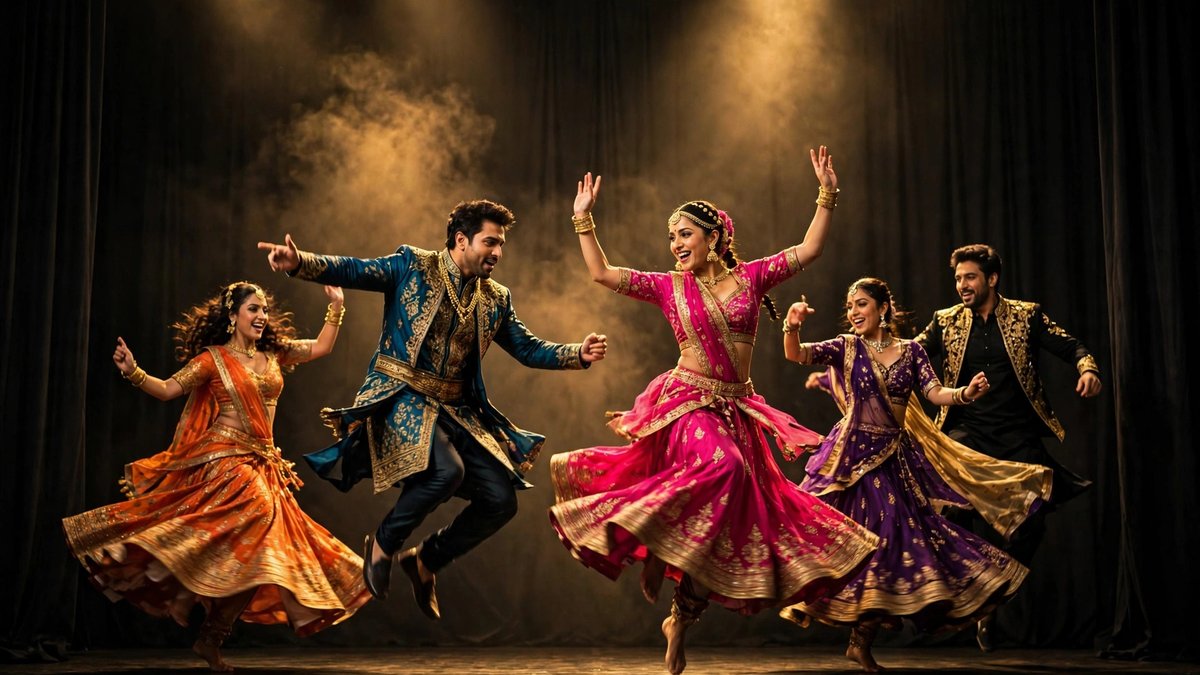
Bollywood
Cinema in dance form — classical, folk and Western, all in one high-energy mix.
Born
1930s, with Indian sound cinema
Where
Hindi film industry, Mumbai, India
Founded by
No single founder — created by generations of film choreographers
The History
Bollywood dance was born with Indian sound cinema. When Alam Ara, the first Indian talkie, arrived in 1931, dance became part of the story itself. Early film dances drew on classical forms like Kathak and Bharatnatyam and folk forms like Bhangra and Garba.
Playback singing, introduced in 1935, changed everything: actors could lip-sync to recorded songs, so choreographers could design bigger, more intricate routines. Through the 1940s–50s the dances were elegant and story-driven; the 1980s–90s brought disco, MTV and Western pop; today Bollywood routinely blends hip-hop, jazz and contemporary movement with Indian roots.
That is why Bollywood has no single founder and no single technique — it is a fusion. At MOBS it is taught as performance: expression, energy, group coordination and stage presence, so students look confident on stage, at weddings and in competitions.
The MOBS Way
It is all about "Masala" — the energy, the colors, and the joy of performing for an audience.
Its Elements
What You'll Learn
- → Basic Bollywood Grooves
- → Expression & Energy
- → Group Coordination
- → Stage Presence
Essentials
Comfortable dance wear or bright, colorful attire.
Joyful exercise, social connection, and high cardiovascular fitness.