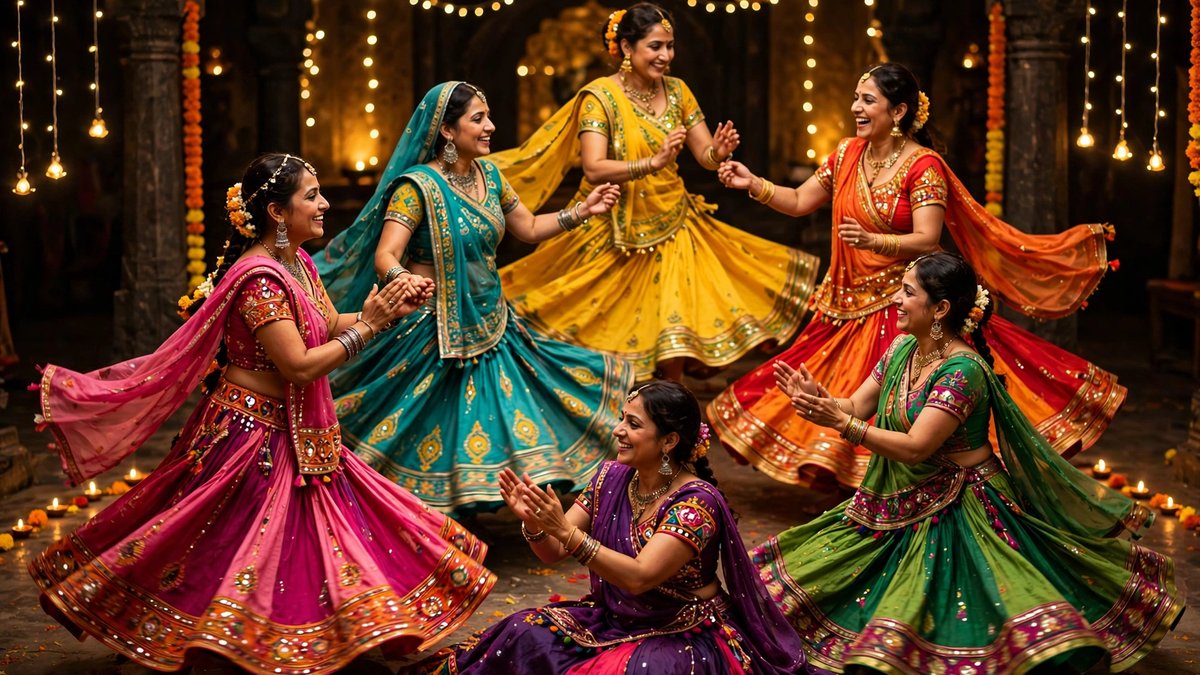
Garba
Gujarat's circle of devotion — danced around the light, for nine nights.
Born
Centuries old, in the villages of Gujarat
Where
Gujarat, India — danced during Navratri
Founded by
No single founder — a folk tradition of Gujarat's communities
The History
Garba is a folk dance from Gujarat, danced during Navratri, the nine-night festival honouring Goddess Durga (Shakti). The word comes from the Sanskrit "garbha", meaning womb — the dance circles around a garbha deep, a clay pot holding a lamp, symbolising life and the divine feminine at the centre.
Dancers move in concentric circles around the lamp or an image of the goddess, clapping in rhythm, twirling in colourful chaniya choli and kediya, to dhol, tabla and Gujarati folk songs. Everyone is invited — all ages dance together — which is why Garba is as much a community celebration as a dance.
In December 2023, UNESCO inscribed "Garba of Gujarat" on its Representative List of the Intangible Cultural Heritage of Humanity. Its sibling form, Dandiya Raas, is danced with sticks at the end of each Navratri night.
The MOBS Way
Devotion expressed as celebration — everyone dances, everyone belongs, and the circle never breaks.
Its Elements
What You'll Learn
- → Basic Garba Steps & Claps
- → Circular Formations
- → Twirls & Rhythm
- → Navratri Performance
Essentials
Chaniya choli or kediya/kurta — colourful, festive attire.
Joyful cardio, community bonding, and a living connection to festival culture.